


Why Spanish Words Confuse Learners
Learning a new language always comes with a few traps, but Spanish is famous for tricky vocabulary pairs that throw off even dedicated students. When you study the Spanish language, you'll quickly notice that many words sound alike, share identical roots, or look deceptively similar to English terms. These linguistic overlaps create sudden moments of confusion that can derail a conversation or turn a simple sentence into a funny misunderstanding.
The biggest culprits fall into a few distinct categories:
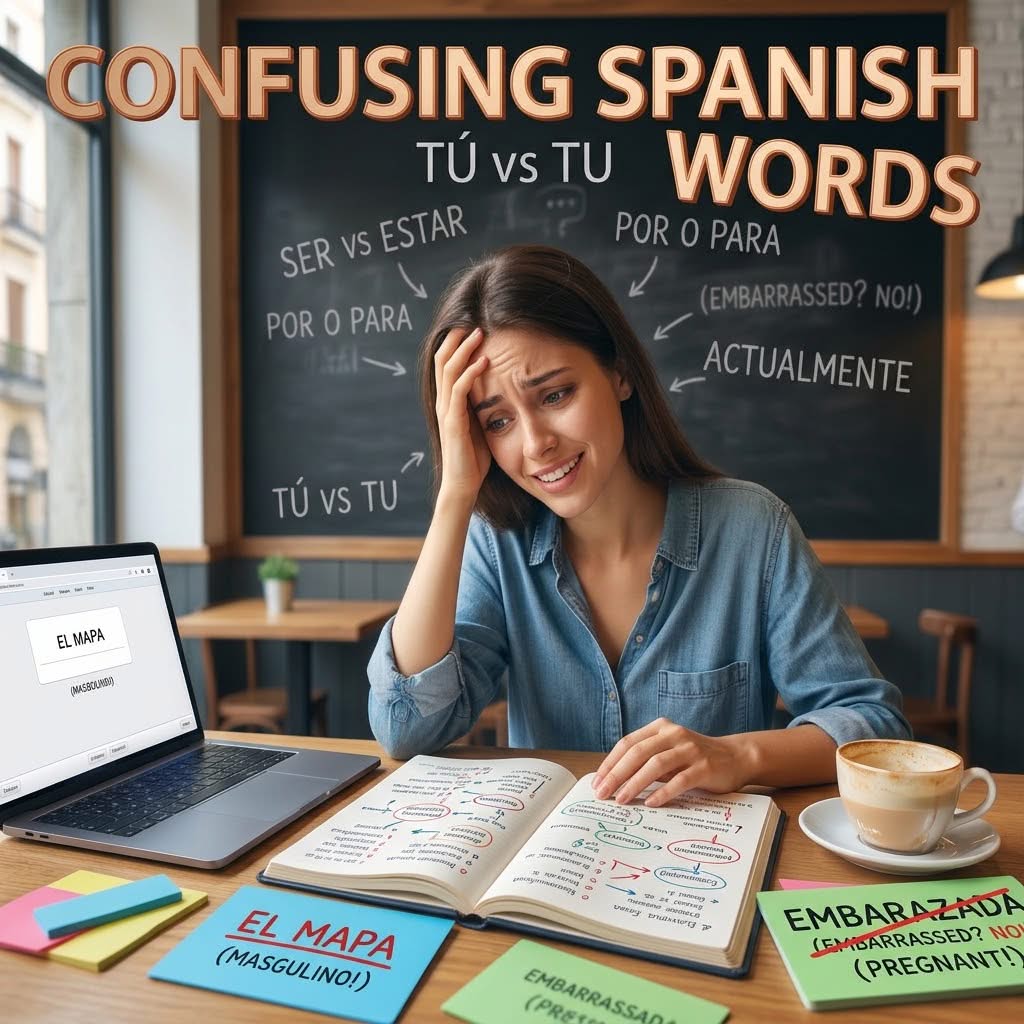
False Friends and Sound-Alikes: Terms like embarazada look and sound like "embarrassed," but actually mean "pregnant." Similarly, slight spelling tweaks like cabello (hair) versus caballo (horse) can lead to unexpected mistakes if you do not pay close attention to the context.
Homophones: Words like haber and a ver sound exactly the same when spoken aloud, which causes doubt when reading or writing.
Tricky Grammar Structures: Beyond simple vocabulary, shift errors in gender (like el mapa instead of la mapa) and fundamental verb pairs like ser and estar require extra practice to master.
Understanding why these confusing Spanish words exist is the first step toward building confidence and speaking smoothly without second-guessing every phrase.
Common Confusing Word Pairs
To master Spanish vocabulary, native English speakers need to pay close attention to specific word groups that frequently cause misunderstandings. Breaking these confusing words in Spanish down into clear categories makes them much easier to recognize and avoid during real conversations.
False Friends: Words that look like English terms often mean completely different things. For example, actual means "current" rather than "real," while actualmente translates to "currently" or "at present." Likewise, embarazada means "pregnant," which can lead to major embarrassment if you accidentally use it to say you feel embarrassed.
Look-Alikes and Prepositions: Similar spellings frequently trip up learners. The prepositions por and para both often translate to "for," but por usually expresses cause, duration, or exchange, while para indicates ultimate purpose, deadlines, or destinations.
Gender Pitfalls: Noun endings can fool you. Words ending in -a like el mapa or el día are masculine, while short forms like la radio (short for la radiodifusión) are feminine despite ending in -o.
Homophones: Words that sound identical require careful context clues. Haber is an auxiliary verb used in compound tenses, whereas a ver means "let us see." Accent marks also change meaning completely: tú with an accent means "you," while tu without an accent is the possessive pronoun "your."
Tricky Verbs: Spanish uses distinct verbs where English relies on just one. Use ser for permanent traits, origin, and identity, but turn to estar for temporary states, locations, and emotions. Similarly, use saber for facts or acquired skills, and conocer for familiarity with people, places, or complex subjects.
How to Master Tricky Vocabulary
Memorizing isolated lists of confusing Spanish words rarely works when you need to speak in real time. To build lasting recall and avoid slip-ups, you need smart study habits anchored in active retrieval and spaced practice.
Use Mnemonics and Color-Coded Flashcards: Create memorable visual associations or quick memory hooks to lock in tricky distinctions. For instance, you might associate masculine exceptions like el mapa with a blue border or a strong masculine imagery anchor. Using customizable digital flashcard platforms allows you to color-code noun genders or group false friends together for visual clarity.
Learn Full Sentences with Spaced Repetition (SRS): Never study words in total isolation. By learning full, natural target sentences through a Spaced Repetition System (SRS), you train your brain to recognize the correct context, preposition, or verb pair automatically. SRS algorithms schedule reviews right before you forget a concept, helping you shift tricky vocabulary from short-term memory into long-term conversational fluency. Anki is arguably the most famous for incorporating SRS, but there are several others like RemNote, Brainscape, and Mochi.
Practice & Resources
Putting your knowledge into action is essential for moving confusing Spanish terms into active recall. Combining targeted practice routines with reliable learning tools ensures you catch tricky errors before they become permanent habits.
Targeted Drills and Writing Prompts: Test yourself daily with short fill-in-the-blank exercises that focus specifically on subtle differences, such as choosing between por and para or picking the correct form of ser versus estar. Follow up by writing three to five original practice sentences using confusing pairs in realistic conversational contexts.
Essential Learning Tools: Keep authoritative reference sites like SpanishDict and WordReference bookmarked to double-check nuanced definitions, usage notes, and regional variations. Additionally, listen to native Spanish podcasts with transcripts to hear tricky vocabulary used naturally in real-time conversations.

0 comments