


Introduction
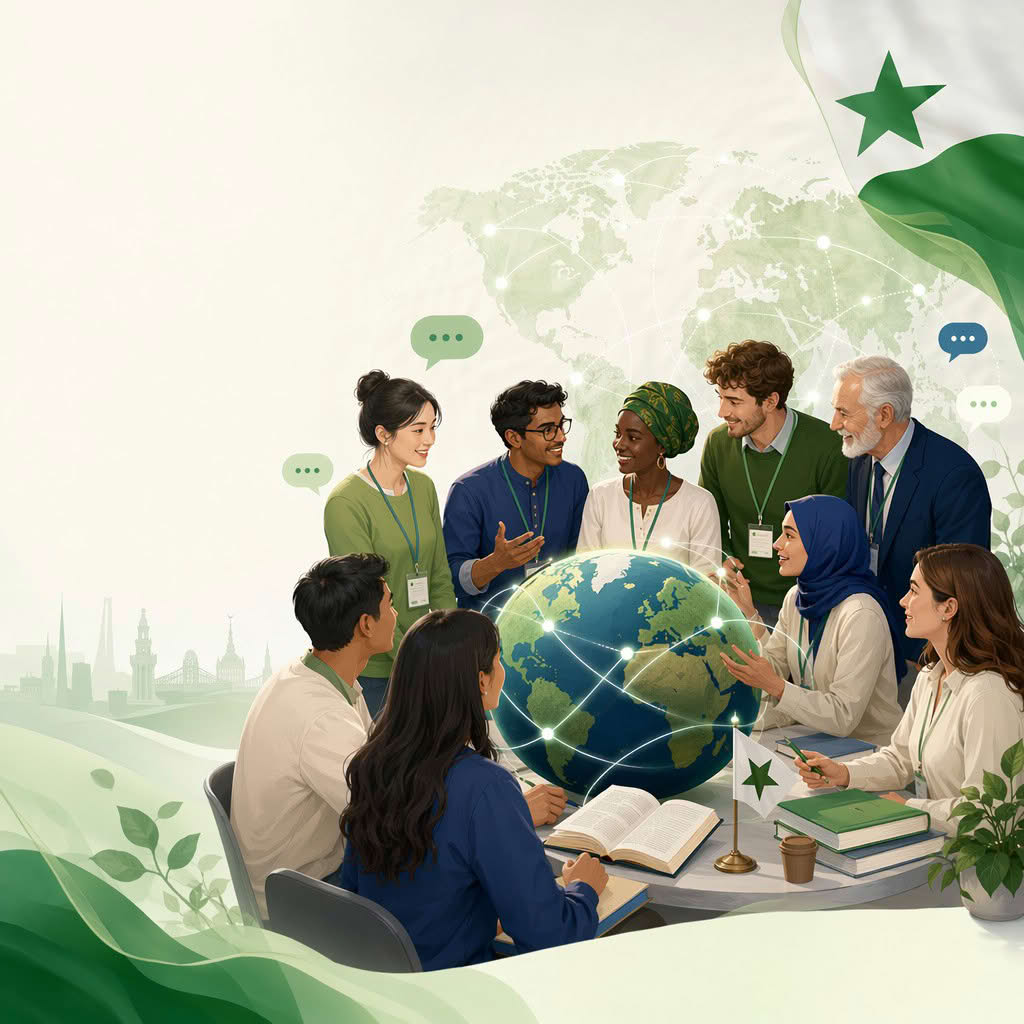
The Universal Esperanto Association, often known by its Esperanto name, Universala Esperanto-Asocio, or simply UEA, is the largest international organization dedicated to promoting Esperanto worldwide. Founded to support the use of Esperanto as a practical language for global communication, the UEA connects speakers, learners, clubs, and national associations across many countries.
Its mission matters because Esperanto was created to make international communication more equal, accessible, and culturally respectful. In a world where language can still create barriers between people, the Universal Esperanto Association remains relevant by supporting language equality, cultural exchange, and communication across borders.
History and Mission
The Universal Esperanto Association, or Universala Esperanto-Asocio, was founded in 1908 by Swiss journalist and Esperanto advocate Hector Hodler, along with a few other people. Hodler believed Esperanto needed more than individual enthusiasm. It needed an organized global network that could connect speakers across borders and make the language useful in everyday international life. One of the UEA’s early milestones was the development of a worldwide delegate network, where Esperanto speakers in different cities could help travelers, answer questions, and support communication between people from different countries.
As history changed, the UEA adapted with it. The association continued its work through periods of political tension, world wars, and major shifts in global communication. It eventually established its headquarters in Rotterdam, Netherlands, and built relationships with international organizations, including UNESCO. While the tools of communication have changed from letters and printed journals to websites, online events, and digital communities, the core purpose of the Universal Esperanto Association has remained consistent: to promote Esperanto as a neutral, accessible language for international understanding.
At its heart, the mission of the UEA is rooted in linguistic neutrality, cultural understanding, and international cooperation. Esperanto was not created to replace national languages, but to give people from different linguistic backgrounds a more equal way to communicate. This is what makes the Universal Esperanto Association important even today. It supports the idea that no single national language should dominate global conversation, and that people from different cultures should be able to connect without one side always having the linguistic advantage.
Structure, Membership, and Governance
The Universal Esperanto Association is structured as a global network rather than a simple local club. Its central office is based in Rotterdam, Netherlands, but its work reaches far beyond one headquarters. The UEA cooperates with national Esperanto associations in many countries, along with local clubs, specialist groups, and youth organizations. One of the most important youth organizations connected to the movement is TEJO, the World Esperanto Youth Organization, which focuses on younger Esperanto speakers and international youth activities.
There are also specialist groups for people interested in areas such as education, science, literature, religion, travel, and professional networking. This structure allows Esperanto speakers to participate in the movement according to their interests, age group, country, or field of work.
Membership in the UEA is open to people who support Esperanto and the association’s mission of international communication and cultural understanding. Individuals can join directly as members, while organizations and national associations can cooperate with the UEA through official relationships or affiliate structures.
Depending on the membership option, members may receive access to publications, services, discounts for events, and opportunities to participate more directly in the Esperanto community. For someone learning Esperanto, joining the Universal Esperanto Association can be a practical way to move beyond apps and textbooks and connect with the living, global Esperanto movement.
Governance in the Universal Esperanto Association is handled through formal decision-making bodies and active participation from members and volunteers. The association has elected leadership and committees that help guide its strategy, finances, publications, events, and international relationships. One of the most visible gatherings connected to the UEA is the Universala Kongreso, or World Esperanto Congress, which brings Esperanto speakers from many countries together each year for lectures, cultural events, meetings, and community building.
Volunteers also play a major role in the association’s work, whether through local clubs, national sections, event organizing, translation, teaching, or online outreach. In many ways, the UEA functions because Esperanto speakers do more than learn the language. They use it to build real international connections.
Activities, Programs, and Services
The Universal Esperanto Association supports Esperanto learners and speakers through a wide range of educational initiatives, events, publications, and advocacy work. For learners, the UEA helps connect people to courses, books, online resources, exams, and learning pathways that make Esperanto more than just a language you study in isolation. This matters because Esperanto becomes far more meaningful once you realize there is a real international community behind it.
One of the association’s most important activities is organizing and supporting Esperanto events around the world. The best-known event is the Universala Kongreso, or World Esperanto Congress, which brings together speakers from many countries for lectures, meetings, concerts, workshops, cultural programs, and social activities. In addition to the annual congress, Esperanto speakers also participate in regional meetings, youth events, specialist gatherings, and local cultural activities.
The Universal Esperanto Association also plays an advocacy role by representing Esperanto in international settings and promoting the values of linguistic equality and cross-cultural understanding. The UEA has worked with organizations such as UNESCO and continues to present Esperanto as a practical and fair option for international communication. It also maintains a media and publishing presence through magazines, books, reports, websites, and other communication channels. Through these programs and services, the UEA helps keep Esperanto visible, useful, and connected to broader conversations about language rights, cultural exchange, and global cooperation.
Impact, Challenges, and Future Outlook
The Universal Esperanto Association has had a major impact on the Esperanto movement by helping turn Esperanto from an interesting language project into a living international community. Its achievements include organizing the annual Universala Kongreso, building relationships with international organizations such as UNESCO, supporting publications and educational resources, and connecting Esperanto speakers through national associations, specialist groups, and global events. While exact membership numbers and participation levels can change over time, the UEA’s long-term success is clear in its ability to keep Esperanto visible for more than a century.
For many learners, one of the most powerful success stories is discovering that Esperanto is not just something you practice alone. It is a language with speakers, events, literature, online communities, and real opportunities for cultural exchange.
At the same time, the Universal Esperanto Association faces real challenges. Like many volunteer-driven cultural organizations, it must deal with questions of funding, membership retention, and long-term sustainability. Visibility is another major challenge. Many people have either never heard of Esperanto or assume it is a failed experiment, even though the language still has an active global community. The UEA also operates in a world where English dominates international communication and where language apps, AI translation tools, and mainstream language learning platforms compete for attention.
In other words, the association is not only promoting a language. It is also promoting a different vision of international communication, one based on fairness, neutrality, and cultural respect.
Looking ahead, the future of the Universal Esperanto Association will likely depend on how well it adapts to digital communication and reaches new generations of learners. Online courses, virtual events, social media, podcasts, YouTube channels, and digital publications can help introduce Esperanto to people who may never attend a local club at first. Youth engagement is also essential, especially through organizations and events that make Esperanto feel relevant, practical, and socially alive.
If the UEA continues expanding its digital presence, strengthening global outreach, and showing how Esperanto connects people across cultures, it can remain an important voice for language equality and international cooperation in the years ahead.

0 comments