


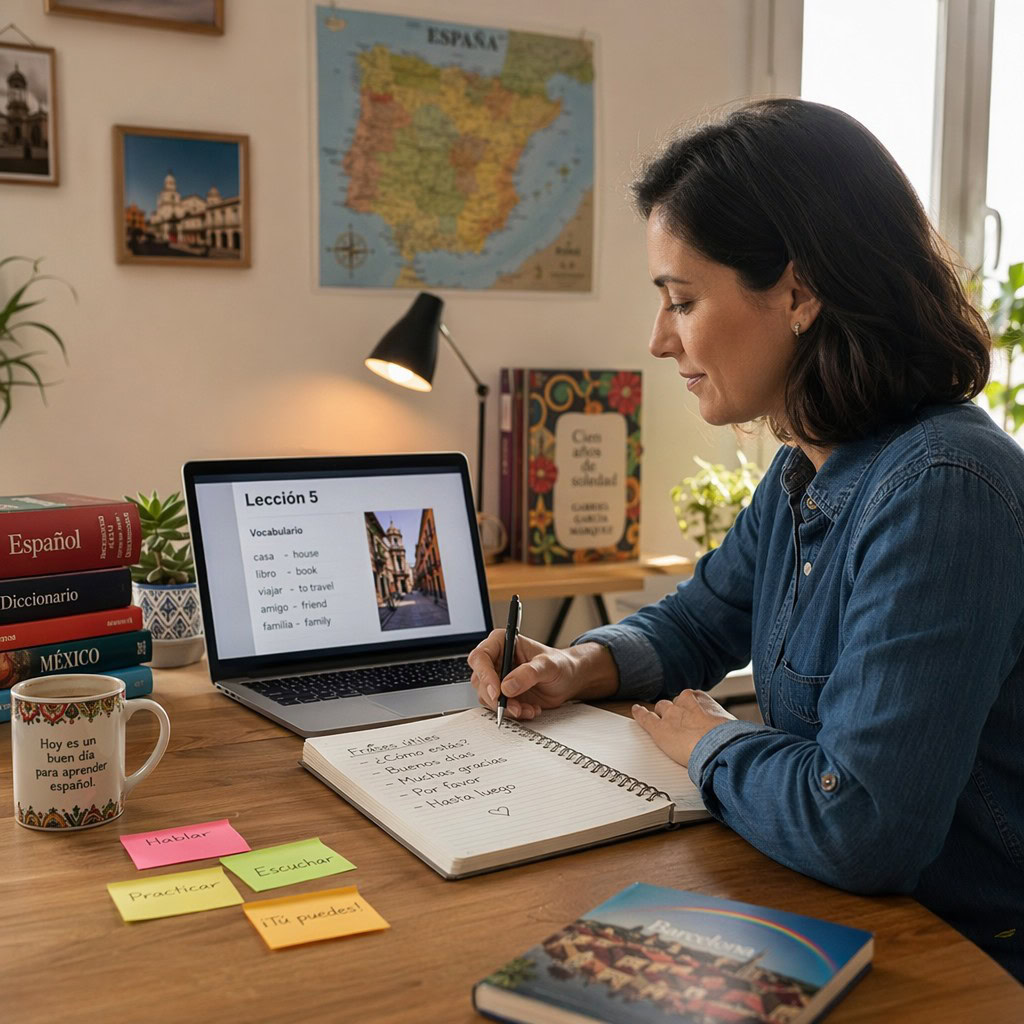
Introduction: Why Learn Spanish as an Adult?
Learning Spanish as an adult can be one of the most rewarding decisions you make, both personally and professionally. Spanish opens doors to new career opportunities, deeper travel experiences, and meaningful connections with millions of people around the world. Beyond practical benefits, learning a new language as an adult also supports cognitive health by improving memory, focus, and mental flexibility. Yet many adults hesitate to start because they believe they lack time, fear repeating past failures, or think they are simply too late to learn a language.
The truth is that these concerns are rooted in myths, not reality. Adults bring powerful advantages to language learning, including stronger pattern recognition, clearer goals, and the ability to learn efficiently with the right system. Fluency does not have to mean sounding like a native speaker or mastering every grammar rule. For most adults, fluency means confidently understanding and communicating in real-world situations, and with consistent daily effort, meaningful progress is far more achievable than you might think.
The Science Behind Adult Language Learning
The science behind adult language learning strongly supports the idea that it is not only possible to learn Spanish later in life, but that adults can learn very effectively with the right approach. While the critical period hypothesis is often misunderstood, modern research on neuroplasticity shows that the adult brain remains capable of forming new neural connections well into old age. Adults may acquire pronunciation differently than children, but they excel at recognizing patterns, using context, and applying prior knowledge.
Memory research also plays a key role in successful language learning. Techniques like spaced repetition help move vocabulary and structures from short term to long term memory, especially when paired with meaningful input. Sleep further strengthens this process by consolidating what you have learned, making consistency more important than long study sessions.
Motivation and habit formation research shows that small, repeatable actions are far more effective than relying on bursts of inspiration. When learning Spanish is built into a daily routine, even for 15 minutes a day, adults are far more likely to stay consistent and see steady progress over time.
Setting Clear Goals and a Practical Learning Plan
Setting clear goals and creating a practical learning plan is essential when you decide to learn Spanish as an adult. Vague goals like “become fluent” often lead to frustration, while specific targets create momentum and clarity. A more effective approach is to use SMART goals, such as aiming to reach an A2 level in Spanish within six months or being able to hold a basic conversation about everyday topics.
The first step is honestly assessing your current level, whether you are a complete beginner or someone with past classroom experience. From there, you can choose materials that match your level and focus on comprehension rather than overwhelming yourself with advanced content. A realistic study schedule is equally important. Adults juggle work, family, and other commitments, so consistency matters more than intensity. A short daily routine, such as 15 to 30 minutes of focused input and review spread across the week, is far more sustainable than occasional long study sessions and fits naturally into a busy adult life.
Choosing the Right Resources
Choosing the right resources can make or break your success when learning Spanish as an adult. Well designed textbooks and grammar references created specifically for adult learners can be useful as support tools, especially when you need clear explanations or quick clarification. However, they work best when paired with exposure to real language.
Digital tools play a major role here. Spaced repetition apps help you retain high-frequency vocabulary (however, watch out for confusing Spanish words!), pronunciation tools allow you to hear and mimic native speech, and gamified apps can provide light practice when used intentionally rather than as your main method. For true progress, immersive input is essential. Podcasts for learners (to listen to spanish), spanish-speaking YouTube channels with comprehensible Spanish, and graded readers allow you to build understanding naturally without translating every word.
As your comprehension grows, investing in spanish classes, tutors, or spanish language exchanges can be valuable, particularly for guided practice (to speak spanish) and feedback. The key is to choose resources that fit your level, support consistent habits, and work together as part of a simple, structured system rather than relying on any single app or tool.
Core Skills: Listening, Speaking, Reading, Writing
Becoming fluent in Spanish as an adult seems far more manageable when you understand how the four core skills work together and how to train them efficiently. Listening should be your foundation, since comprehension drives everything else. Start with slow or learner focused content, then gradually move toward native speed podcasts and videos as your understanding improves. You could even listen to Spanish music from time to time. Techniques like shadowing, where you repeat what you hear aloud, help train your ear and improve pronunciation at the same time.
Speaking often causes the most anxiety, so low pressure practice is essential. Language partners, simple role play scenarios, and speech recognition tools allow you to practice without fear of judgment.
Reading supports vocabulary growth when done strategically. Graded readers and short articles expose you to high frequency words in context, making them easier to remember without memorization.
Writing ties everything together by forcing you to actively produce the language. Simple journaling, short messages, and targeted corrections help reveal gaps in your knowledge, especially when combined with feedback from native speakers.
When these skills are trained together with an emphasis on comprehension first, progress becomes steady and sustainable.
Practical Techniques That Work for Adults
Practical techniques make a significant difference when adults learn Spanish, especially when time and energy are limited. Spaced repetition systems are one of the most reliable ways to retain vocabulary long term, but they work best when you focus on high frequency words and phrases rather than trying to memorize everything. Short, daily reviews are far more effective than long, irregular sessions.
Another powerful strategy is chunking, which means learning phrases and sentence patterns instead of isolated words. This allows you to communicate sooner and reduces the mental load when speaking.
Interleaving practice also helps adult learners progress faster. Mixing listening, reading, and light speaking within a single short session strengthens recall and keeps learning engaging.
Perhaps most important is adopting an output before perfection mindset. Waiting until you feel ready often leads to avoidance, while speaking early and imperfectly builds confidence and reveals exactly what you need to improve. Progress comes from using the language, not from eliminating every mistake in advance.
Immersion Strategies Without Moving Abroad
You do not need to move abroad to immerse yourself in Spanish as an adult. Immersion is less about location and more about how often you interact with the language. At home, you can create a Spanish speaking environment by surrounding yourself with Spanish media such as videos, podcasts, music, and social media. Simple habits like changing your phone language, labeling common objects, or pairing daily routines with Spanish content help reinforce exposure without adding extra time.
Finding conversation partners is another key component. Language exchanges, Meetup groups, and online tutors provide regular opportunities to practice speaking in a supportive setting. Even short, consistent conversations build confidence over time.
Travel, local cultural events, and community resources also offer valuable real world practice. Attending festivals, cultural centers, or Spanish speaking meetups allows you to use the language naturally and connect learning to meaningful experiences, which strengthens both motivation and retention.
Overcoming Common Adult Challenges
Adults learning Spanish often struggle not because of ability, but because of practical and emotional obstacles. Time constraints are the most common challenge, yet the solution is rarely finding more time. Microlearning and prioritized practice allow you to make progress in short, focused sessions that fit into real life. Even 10 to 15 minutes of intentional input and review can compound into meaningful results.
Fear of making mistakes is another major barrier, often rooted in perfectionism and past learning experiences. Reframing mistakes as feedback rather than failure helps reduce anxiety and encourages consistent practice.
Plateaus can also feel discouraging, especially when progress becomes less visible. These moments are usually a sign that your input is too easy, too difficult, or no longer aligned with your goals. By adjusting content level, increasing meaningful exposure, or reintroducing structured routines, you can break through stagnation and regain momentum without starting over.
Measuring Progress and Staying Motivated
Measuring progress and staying motivated are critical when learning Spanish as an adult, especially during longer stretches where improvement feels subtle. Practical milestones provide clarity and reassurance. Recording yourself speaking, revisiting older recordings, and comparing comprehension over time offer concrete evidence of growth. Formal benchmarks like CEFR level descriptors or practice exams can also be useful, but real conversations are often the most meaningful test of progress.
Tracking tools help make consistency visible. Simple study logs, streak counters, or short progress journals allow you to see patterns and stay accountable without becoming obsessive. Just as important is celebrating small wins, such as understanding a full podcast episode or successfully navigating a conversation.
Long term motivation is best maintained by varying your goals, shifting between comprehension, communication, and cultural exploration so that learning Spanish remains engaging rather than feeling like a rigid obligation.

0 comments