


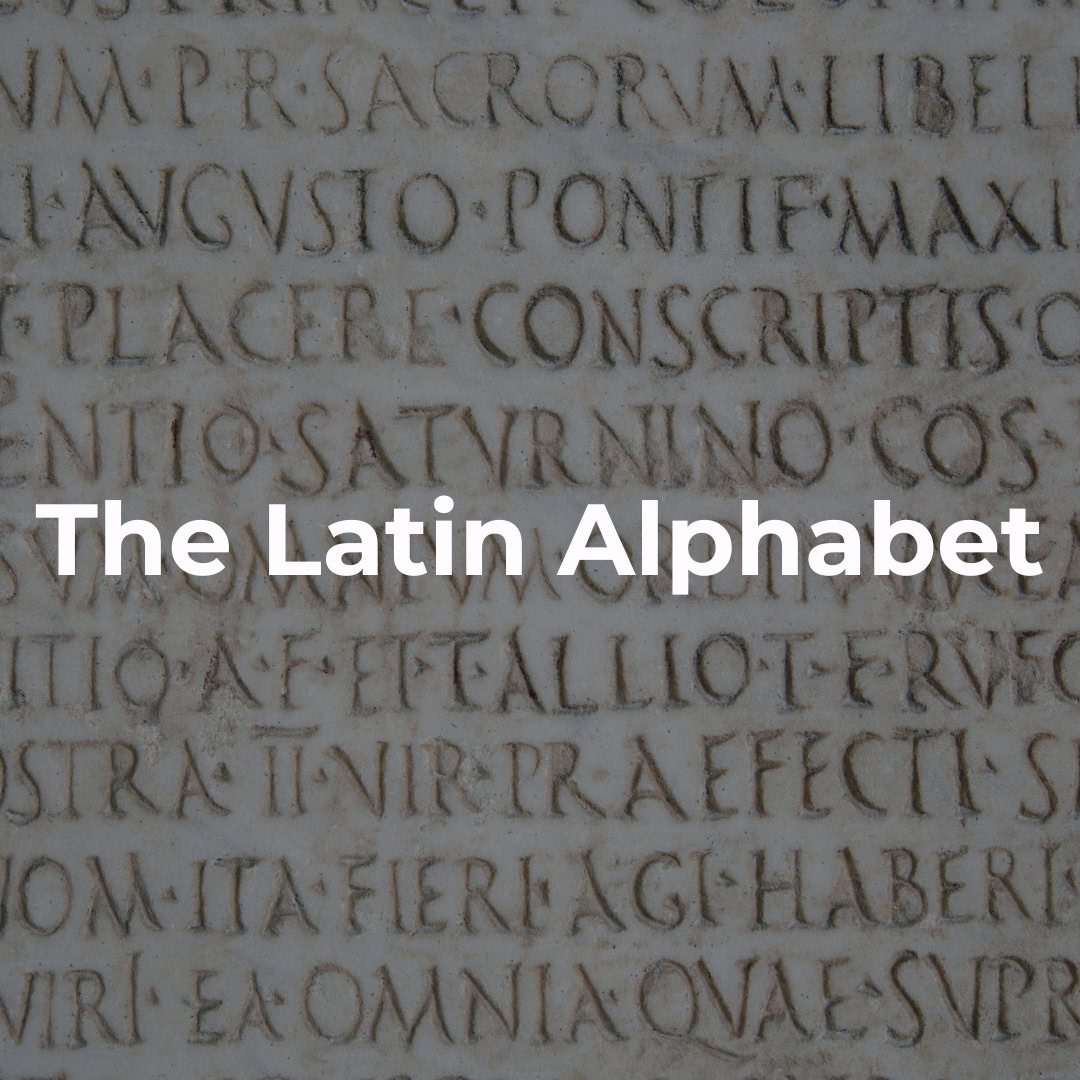
Introduction
If you've ever written an email, read a book, or typed a text message, chances are you've used the Latin alphabet without even thinking about it. Also known as the Roman alphabet, the Latin alphabet is the most widely used writing system in the world today. It serves as the foundation for hundreds of languages across multiple continents, making it one of the most powerful tools for global communication that has ever existed.
Its importance goes far beyond just writing. The Latin alphabet plays a critical role in technology, international business, science, and diplomacy. From computer keyboards to street signs, its presence is nearly impossible to escape no matter where you are in the world.
In this article, we are going to take a deep dive into everything you need to know about the Latin alphabet. We will cover its fascinating history, how it is structured, the variations that exist across different languages, how it is used around the world today, and some practical tips for anyone who is learning a language that uses it.
By the end, you will have a solid understanding of why this alphabet is so much more than just a set of letters.
Quick Facts
Before we get into the full history, here are a few quick facts to give you a solid foundation going into this article.
The standard modern Latin alphabet consists of 26 letters, starting with A and ending with Z. However, it is worth noting that not every language that uses the Latin alphabet uses all 26 letters. Some languages add extra letters or modified characters to account for sounds that do not exist in other languages, but we will get into that in more detail later.
In terms of geographic and linguistic reach, the Latin alphabet is used by roughly 70% of the world's population in some capacity. It is the official writing system for the vast majority of languages in Western Europe, North and South America, Sub-Saharan Africa, and Oceania. Languages like Spanish, French, Portuguese, English, and Italian all rely on it, and those languages alone account for billions of speakers worldwide.
Now, let's clear up a common misconception right away. Many people assume that the Latin alphabet and the English alphabet are one and the same. They are not. English uses the Latin alphabet, but so do dozens of other languages, each with their own unique sounds, rules, and sometimes even additional characters. The Latin alphabet belongs to no single language. It is a shared tool that has been adapted and borrowed across cultures for thousands of years.
Origins and History
The Latin alphabet did not appear out of thin air. Like most great things in history, it was the result of centuries of borrowing, adapting, and refining from cultures that came before it.
Early Origins: Etruscan and Phoenician Influences
The story of the Latin alphabet begins with the Phoenicians, an ancient civilization based in the region we now call Lebanon. Around 1050 BC, the Phoenicians developed one of the earliest known alphabets, which consisted entirely of consonants. This writing system spread rapidly across the Mediterranean world due to the Phoenicians being prolific traders and seafarers.
The Greeks eventually adopted the Phoenician alphabet and made a significant contribution of their own by adding vowels, creating a more complete writing system. From the Greeks, the alphabet made its way to the Etruscans, a civilization that inhabited central Italy long before Rome rose to power. The Romans then borrowed heavily from the Etruscan alphabet, and from that foundation, the Latin alphabet was born.
Development Through Ancient Rome and Classical Latin
As Rome grew from a small city-state into one of the most powerful empires the world has ever seen, the Latin alphabet grew with it. The Romans refined the alphabet to better suit the sounds of their language, dropping some Etruscan letters and adding new ones.
By the time of Classical Latin, the alphabet had taken on a form that would be recognizable to most modern readers. Latin became the language of law, literature, religion, and governance across a vast empire that stretched from Britain all the way to the Middle East. Everywhere Rome went, the Latin alphabet followed.
Medieval Adaptations: Scripts, Scribes, and Manuscript Changes
After the fall of the Western Roman Empire in 476 AD, the Latin alphabet did not disappear. Instead, it was kept alive primarily by the Catholic Church and the monks and scribes who worked tirelessly in monasteries across Europe.
During the medieval period, various scripts emerged as different regions developed their own handwriting styles. One of the most notable was Carolingian minuscule, a clear and legible script that was developed during the reign of Charlemagne in the 8th and 9th centuries.
This script became widely adopted across Europe and laid the groundwork for the lowercase letters we use today. Without the dedication of medieval scribes, much of what we know about the ancient world would have been lost, and the alphabet itself may have looked very different.
Renaissance Standardization and the Printing Press
The Renaissance brought with it a renewed interest in classical learning and a desire to standardize written language. This movement received a massive boost in the mid-15th century when Johannes Gutenberg introduced the printing press to Europe. Before the printing press, books were copied by hand, which meant that spelling, letterforms, and punctuation varied wildly from one manuscript to the next.
The printing press changed everything.
For the first time in history, it was possible to produce thousands of identical copies of a text, which naturally pushed toward greater consistency in how the Latin alphabet was used and how words were spelled. This period was a turning point that helped shape the modern alphabet as we know it today.
Modern Reforms and the Spread via Colonization and Globalization
Over the last few centuries, the Latin alphabet has spread to virtually every corner of the globe, largely as a result of European colonization. As European powers expanded their empires across the Americas, Africa, Asia, and the Pacific, they brought their languages and writing systems with them.
Indigenous languages that previously had no written form were transcribed using the Latin alphabet, sometimes with added characters to capture unique sounds.
In more recent times, globalization and the rise of the internet have further cemented the dominance of the Latin alphabet. The fact that most programming languages, websites, and digital communication systems are built around it has made it nearly impossible to participate in the modern world without some familiarity with its letters.
Structure and Letters
Now that we have covered where the Latin alphabet came from, let us take a closer look at how it is actually structured and what makes it work the way it does.
The 26 Letters of the Modern Latin Alphabet
The modern English-based Latin alphabet consists of the following 26 letters:
A, B, C, D, E, F, G, H, I, J, K, L, M, N, O, P, Q, R, S, T, U, V, W, X, Y, Z
These 26 letters form the backbone of the English language and serve as the standard reference point when people talk about the Latin alphabet in its most basic form. However, as we will see shortly, this list is just the beginning of the story.
Letter Names, Uppercase vs Lowercase, and Forms
Each letter in the Latin alphabet has a name, a sound, and two distinct forms: uppercase and lowercase. Uppercase letters, also known as capital letters, are typically used at the beginning of sentences, for proper nouns, and for certain abbreviations. Lowercase letters are used for everything else.
For example, the letter A in its uppercase form looks like this: A.
In its lowercase form, it looks like this: a.
While this may seem obvious to a fluent English speaker, it is worth pointing out because not all writing systems in the world make this distinction. The fact that the Latin alphabet has two forms for every letter adds a layer of flexibility that has made it easier to adapt across different contexts, from formal documents to casual text messages.
Letters Added or Removed Throughout History
The 26 letters we use today were not always part of the alphabet. In fact, the Latin alphabet has gone through quite a few changes over the centuries, with letters being added, removed, and repurposed along the way.
The letter J, for example, did not exist in classical Latin. For a long time, the letter I was used to represent both the vowel sound in words like "it" and the consonant sound in words like "yes." It was not until the Middle Ages that J began to emerge as a distinct letter to represent the consonant sound, and it was not fully standardized until the 17th century.
Similarly, the letters U and V were once considered the same letter. In classical Latin, V was used to represent both the vowel sound we associate with U today and the consonant sound we associate with V. Over time, the two were separated into distinct letters to reduce confusion.
The letter W is a relative newcomer as well. It was introduced in the Middle Ages to represent a sound that did not exist in classical Latin, and its name, which literally means "double U," gives away its origins. Interestingly, in some languages like German and Polish, W is pronounced more like an English V, which is a reminder of just how differently the same letter can be interpreted across languages.
On the other end of the spectrum, some letters that existed in earlier versions of the Latin alphabet eventually fell out of use. The letter Ƿ, known as Wynn, was used in Old English but was eventually replaced by W. Similarly, the letter Þ, known as Thorn and used to represent the "th" sound, gradually disappeared from common use as well.
Diacritics and Additional Letters in Other Languages
One of the most interesting aspects of the Latin alphabet is how different languages have adapted it to suit their own unique sounds. This is often done through the use of diacritics, which are small marks added to letters to change or clarify their pronunciation.
In Spanish, for example, the tilde is added to the letter N to create Ñ, which represents a distinct sound that does not exist in English. You can hear it in words like mañana and señor. Spanish also uses the acute accent over vowels, such as é, to indicate stress in certain words.
French takes diacritics even further. French uses the acute accent as in é, the grave accent as in è, the circumflex as in ê, the cedilla as in ç, and the diaeresis as in ë. Each of these marks serves a specific purpose, whether it is to change the pronunciation of a vowel, distinguish between two words that are spelled the same way, or indicate a historical letter that has since been dropped from the language.
Esperanto, the world's most widely spoken constructed language, has its own set of additional letters that go beyond the standard 26. These include ĉ, ĝ, ĥ, ĵ, ŝ, and ŭ, each of which represents a specific sound. What makes Esperanto particularly interesting is that its creator, L.L. Zamenhof, designed the alphabet with the goal of making it as phonetically consistent as possible.
In Esperanto, every letter has one sound and one sound only, which makes it significantly easier to learn to read and pronounce compared to languages like English or French where the same letter can represent multiple different sounds depending on the context.
Other languages like German use the umlaut, which adds two dots above a vowel as in ä, ö, and ü, to indicate a change in pronunciation. Portuguese uses the tilde over vowels as in ã and õ to indicate a nasal sound. And Scandinavian languages like Swedish and Norwegian have added entirely new letters to their alphabets such as Å, Ä, and Ö to account for sounds that do not exist in the standard Latin alphabet.
All of these variations are a testament to just how flexible and adaptable the Latin alphabet truly is. Rather than being a rigid and fixed system, it has proven time and again that it can be shaped and molded to fit the needs of virtually any language that adopts it.
Phonetics and Pronunciation
One of the most important things to understand about the Latin alphabet is that the letters themselves do not have fixed sounds. The same letter can represent completely different sounds depending on which language you are reading or speaking. This is one of the first things that trips up new language learners, and it is worth addressing head-on.
How Letters Map to Sounds
At its core, an alphabet is a system designed to represent the sounds of a spoken language in written form. Each symbol, or letter, is meant to correspond to a sound known in linguistics as a phoneme. In a perfect alphabet, every letter would represent exactly one sound and every sound would be represented by exactly one letter. In practice, however, very few languages work this way.
Over centuries of change, borrowing, and evolution, the relationship between letters and sounds in most languages has become complicated, inconsistent, and sometimes downright confusing.
The degree to which a writing system consistently represents sounds is referred to as its phonemic orthography. Some languages have a very high degree of phonemic consistency, meaning that what you see on the page is almost always what you say out loud. Other languages have a much lower degree of consistency, meaning that you often have to memorize how a word is pronounced rather than being able to figure it out just by looking at it.
English: A Complex Relationship Between Letters and Sounds
English is widely regarded as one of the more challenging languages when it comes to the relationship between spelling and pronunciation. The same letter or combination of letters can represent wildly different sounds depending on the word.
Consider the letter C, for example. In the word "cat," it makes a hard K sound. In the word "city," it makes a soft S sound.
Now consider the combination "ough," which appears in words like "though," "through," "thought," "tough," and "cough." Despite being spelled the same way, each of these words pronounces that combination differently.
This kind of irregularity is the result of English borrowing heavily from other languages throughout its history, including French, Latin, Greek, and Norse, each of which brought their own spelling conventions along with them.
Spanish: A Model of Consistency
Spanish sits at the opposite end of the spectrum from English when it comes to phonemic consistency. In Spanish, the relationship between letters and sounds is remarkably straightforward. With only a handful of exceptions, every letter in Spanish represents one specific sound, and that sound stays consistent across virtually all words.
This is one of the reasons why Spanish is considered one of the easier languages for English speakers to learn to read and pronounce. Once you learn the sounds associated with each letter, you can pick up almost any Spanish text and read it out loud with a reasonable degree of accuracy, even if you do not understand what the words mean.
The letter A in Spanish, for example, always makes the same sound, as in "casa" or "mano." No silent letters are hiding around every corner, and no sudden shifts in pronunciation that seem to follow no logical pattern.
French: Beauty and Complexity
French presents a fascinating middle ground that leans more toward complexity. While French spelling follows certain rules and patterns, those rules come with a significant number of exceptions and nuances that can take years to fully master. To illustrate, French is widely known for its prevalence of silent letters. In French, the final consonant of a word is very often not pronounced at all. The word "vous," for example, is pronounced more like "voo" with the S being completely silent.
French also makes extensive use of nasal vowels, which are sounds produced with air flowing through both the mouth and the nose simultaneously. These sounds have no real equivalent in English and can be quite difficult for English speakers to produce naturally.
Diacritics play an important role in French pronunciation as well. The cedilla beneath the letter C, as in ç, signals that the C should be pronounced as an S rather than a K. The various accent marks over vowels indicate subtle but meaningful shifts in how those vowels are pronounced.
Esperanto: One Letter, One Sound
If Spanish is consistent, then Esperanto is virtually perfect when it comes to the relationship between letters and sounds. Esperanto was deliberately designed by its creator L.L. Zamenhof to be as easy to learn as possible, and one of the ways he achieved this was by ensuring that every single letter in the Esperanto alphabet represents one and only one sound, without exception.
There are no silent letters in Esperanto.
There are no letters that change their sound depending on the surrounding letters.
What you see is exactly what you say, every single time.
This makes Esperanto extraordinarily easy to read and pronounce from day 1, which is one of the many reasons why it is often recommended as a first language for people who are new to language learning. The additional letters unique to Esperanto, such as ĉ, ĝ, ĥ, ĵ, ŝ, and ŭ, each represent a specific sound that does not change under any circumstances, making the system airtight in a way that naturally evolved languages simply cannot match.
The Role of Diacritics and Digraphs
Beyond individual letters, many languages that use the Latin alphabet rely on diacritics and digraphs to represent sounds that the standard 26 letters cannot capture on their own.
Diacritics, as we discussed in the previous section, are marks added to letters to modify their pronunciation. They are an elegant solution to the problem of representing a wide range of sounds with a limited set of symbols. Rather than inventing entirely new letters from scratch, languages simply take existing letters and add a small mark to signal a change in sound.
Digraphs take a different approach. A digraph is a combination of two letters that together represent a single sound.
In English, for example, the combination "sh" represents a single sound as in "ship" or "shoe." The combination "ch" represents another single sound as in "chair" or "cheese."
In Spanish, "ll" and "rr" are classic examples of digraphs, each representing sounds that are distinct from the individual letters on their own.
In French, "ou" represents a specific vowel sound, and "eau" is a three-letter combination that represents yet another sound entirely.
Together, diacritics and digraphs give languages the flexibility to represent a much wider range of sounds than the 26 letters of the standard Latin alphabet would allow on their own.
Variants and Adaptations
The Latin alphabet is not a one-size-fits-all system. Over the centuries, it has been stretched, modified, and reimagined countless times to fit the needs of languages that are vastly different from one another. This adaptability is arguably its greatest strength, and it is a big part of why it has become the most widely used writing system in the world today.
Regional Alphabets Derived from Latin
The most natural extensions of the Latin alphabet can be found in the languages that descended directly from Latin itself. The Romance languages, which include Spanish, French, Portuguese, Italian, and Romanian, all use variations of the Latin alphabet that closely resemble the original. Since these languages evolved directly from spoken Latin, the transition to using a Latin-based writing system was a natural one.
Each language made its own adjustments along the way, adding diacritics and in some cases modifying letters to better capture the sounds that had developed over centuries of linguistic evolution.
Germanic languages like German, Dutch, Swedish, Norwegian, and Danish also use the Latin alphabet, though with their own regional tweaks. German, for example, adds the umlaut vowels ä, ö, and ü, as well as the unique letter ß, known as the Eszett, which represents a sharp S sound. Swedish and Norwegian include the letters Å, Ä, and Ö. Dutch makes heavy use of digraphs like "ij" which functions almost as a single letter in everyday writing. Despite these differences, all of these languages share the same fundamental Latin foundation.
The situation gets more interesting when we look at Slavic languages. Many Slavic languages, such as Russian, Bulgarian, and Serbian, use the Cyrillic alphabet rather than the Latin alphabet.
However, there are notable exceptions.
Polish, Czech, Slovak, Croatian, and Slovenian all use Latin-based alphabets, each adapted to handle the complex range of sounds that Slavic languages are known for. Polish, for example, uses letters like ą, ę, ś, ź, and ż to represent sounds that have no equivalent in the standard Latin alphabet.
Czech uses a system of diacritics that was largely designed by the religious reformer Jan Hus in the 15th century, a system that is often praised for its elegance and consistency.
Croatian uses a Latin alphabet that was standardized in the 19th century and is notable for its high degree of phonemic consistency, similar in spirit to Spanish and Esperanto.
One of the most dramatic examples of a Latin alphabet adaptation driven by political will rather than natural evolution is the story of Turkish. For centuries, Turkish was written using the Arabic script. In 1928, however, the founder of modern Turkey, Mustafa Kemal Atatürk, introduced a sweeping language reform that replaced the Arabic script with a newly designed Latin-based alphabet.
The reform was part of a broader effort to modernize Turkish society and increase literacy rates. The new Turkish alphabet was carefully designed to represent the sounds of spoken Turkish with a high degree of accuracy, and it included several modified letters such as ç, ş, ğ, and ı to handle sounds unique to the Turkish language.
The transition was remarkably swift.
Within a few years, the new alphabet was being taught in schools across the country and the old script had been largely phased out. Today, the Turkish Latin alphabet is considered one of the more successful planned language reforms in modern history.
Latin Script for Non-Indo-European Languages
Perhaps even more remarkable is the fact that the Latin alphabet has been successfully adopted by languages that have no historical or linguistic connection to Latin or to Europe at all.
Vietnamese is a striking example. Vietnamese is a tonal language, meaning that the pitch at which a syllable is spoken changes its meaning entirely. It belongs to the Austroasiatic language family and has no relation to any European language. Despite this, Vietnamese today is written using a Latin-based alphabet known as Chữ Quốc Ngữ, which translates roughly to National Language Script.
This system was developed in the 17th century by Catholic missionaries, most notably the French Jesuit priest Alexandre de Rhodes, who needed a way to write down Vietnamese sounds using tools that European readers would recognize. The resulting alphabet is remarkable in its complexity, featuring a wide array of diacritics that indicate both vowel quality and tone.
A single vowel can appear in multiple forms depending on which tone it carries, making Vietnamese one of the most visually distinctive uses of the Latin alphabet in the world.
Indonesian and Malay present a very different story. Both languages are written using a clean and relatively straightforward Latin alphabet with very few diacritics. This system was introduced during the colonial period and has been largely retained in both countries since independence.
Indonesian in particular is often cited as one of the easier languages for English speakers to begin reading because its spelling is highly consistent and it does not require learners to master a new script before they can start engaging with written material.
Across Sub-Saharan Africa, the Latin alphabet has been adapted for hundreds of languages, many of which had no written form prior to contact with European missionaries and colonizers. Languages like Swahili, Yoruba, Hausa, Zulu, and Igbo all use Latin-based writing systems today.
In many cases, linguists and local scholars worked together to develop orthographies that could capture the unique sounds of each language, often adding diacritics or digraphs to handle tones, click consonants, and other features that are entirely absent from European languages.
While the colonial origins of this process are complicated and cannot be separated from the broader history of exploitation and cultural disruption, the practical result is that millions of people across Africa are now able to read and write in their native languages using a widely recognized script.
Transliteration Systems for Other Scripts
Not every language that uses the Latin alphabet has fully transitioned away from another script. In many cases, Latin-based systems are used alongside an existing script as a way of making pronunciation accessible to outsiders or for use in digital and informal contexts.
Romanization, the process of converting text from a non-Latin script into the Latin alphabet, has been applied to dozens of languages around the world. For Russian and other Cyrillic-script languages, various romanization systems exist, though none has been universally adopted.
You will often see Russian names and words rendered in Latin letters in international news articles, on maps, and in academic texts, though the specific spelling can vary depending on which romanization standard is being used. The name of the Russian composer Tchaikovsky, for example, has been spelled in numerous different ways in Latin-script publications over the years, which can cause no small amount of confusion.
Arabic presents a similar situation. Arabic has its own rich and ancient script that reads from right to left, and it is the sacred script of the Quran. However, for the purposes of language learning, academic study, and digital communication, Arabic words are frequently rendered in a Latin-based transliteration.
There is no single universally accepted standard for romanizing Arabic, which means that the same Arabic word can appear in multiple different spellings depending on the context. The name of the Prophet Muhammad, for example, has been rendered in English texts as Muhammad, Mohammed, Mohamad, and several other variations, all of which are attempts to capture the same Arabic sounds using Latin letters.
Chinese presents yet another fascinating case. Mandarin Chinese is written using thousands of characters, each of which represents a syllable with a specific meaning. For the purpose of teaching pronunciation, a romanization system called Pinyin was developed in China in the 1950s and officially adopted in 1958.
Pinyin uses the Latin alphabet along with tone marks to represent the sounds of Mandarin in a way that is accessible to learners who are not yet familiar with Chinese characters. Today, Pinyin is used in classrooms around the world as the standard tool for introducing Mandarin pronunciation, and it has also become the dominant method for inputting Chinese characters on keyboards and smartphones.
How Esperanto Adapted the Latin Alphabet
Esperanto occupies a unique place in the story of the Latin alphabet because it is the only major language in this discussion that was deliberately constructed from the ground up rather than evolving naturally over time. When L.L. Zamenhof created Esperanto in the late 19th century, he had the rare luxury of designing his writing system from scratch, which meant he could make deliberate and thoughtful decisions about how to structure it.
Zamenhof based Esperanto's alphabet on the Latin script but made several key modifications to ensure that the language would be as easy to learn and as phonemically consistent as possible.
The standard 26 letters of the Latin alphabet were not sufficient to represent all of the sounds Zamenhof wanted to include in Esperanto, so he added six additional letters by placing diacritics on top of existing ones. These letters are ĉ, ĝ, ĥ, ĵ, ŝ, and ŭ. Each one represents a specific sound that does not shift or vary depending on context. The letter ĉ, for example, always represents the "ch" sound as in "church." The letter ŝ always represents the "sh" sound as in "shop."
This level of consistency is something that naturally evolved languages simply cannot offer, and it is one of the reasons why learners of Esperanto can typically begin reading and pronouncing words correctly within just a few hours of picking up the language.
One practical challenge that Esperanto has faced over the years is the fact that those six additional letters with diacritics do not appear on standard keyboards. In the early days of the internet, this created real difficulties for Esperanto speakers who wanted to write in their language online.
Various workarounds emerged over time, including a system called the x-system in which the letter x is placed after a base letter as a substitute for the diacritic, so that ĉ becomes cx and ŝ becomes sx. While this system is functional, most Esperanto speakers today prefer to use the proper accented letters whenever possible, and modern devices and software have made this significantly easier than it used to be.
Ultimately, Esperanto's adaptation of the Latin alphabet stands as one of the most thoughtful and deliberate uses of the script in its long history. Rather than inheriting centuries of inconsistencies and irregularities, Esperanto started fresh and built something clean, logical, and accessible, a reflection of the broader vision that inspired the language in the first place.
Cultural and Technical Influence
The Latin alphabet is far more than just a writing system. Over the course of its long history, it has quietly shaped the way human beings organize knowledge, communicate ideas, build institutions, and interact with technology. To understand just how deeply it has embedded itself into modern life, it helps to look at the specific domains where its influence has been most profound.
Role in Education, Literature, Law, and Religion
Perhaps nowhere has the Latin alphabet had a more lasting impact than in the realm of education. For centuries, literacy in the Western world was synonymous with the ability to read and write using the Latin alphabet. During the medieval period, Latin was the language of scholarship across Europe, and the ability to read Latin texts was considered the foundation of a proper education.
Students learned the alphabet as the first step toward accessing the accumulated knowledge of the ancient world, from the philosophical works of Cicero and Seneca to the scientific writings of Pliny the Elder.
Even as spoken Latin faded from everyday use, the Latin alphabet remained the vehicle through which knowledge was recorded and transmitted from one generation to the next.
As vernacular languages like French, Spanish, Italian, and English began to develop their own literary traditions, they did so using the Latin alphabet as their foundation. This meant that the entire canon of Western literature, from Dante's Divine Comedy to Shakespeare's plays to the novels of Cervantes, was built upon the same basic set of symbols.
The alphabet became the shared infrastructure of a literary civilization, a common thread running through works that were otherwise separated by language, time, and geography.
In the domain of law, the Latin alphabet played an equally important role. Roman law, which forms the basis of legal systems across much of Europe and Latin America today, was written in Latin using the Latin alphabet.
Legal terms and concepts that originated in Roman texts have been carried forward into modern legal practice largely intact, and many of them are still written in their original Latin form even in courts where Latin has not been spoken for centuries. Terms like habeas corpus, pro bono, prima facie, and in absentia are all direct inheritances from a legal tradition that depended on the Latin alphabet to preserve and transmit its ideas.
Religion represents yet another domain where the influence of the Latin alphabet cannot be overstated. The Catholic Church adopted Latin as its official language in the early centuries of Christianity, and for well over a thousand years, the Latin Bible known as the Vulgate was the authoritative text of the Western Church. Priests, monks, and scholars across Europe learned to read and write in Latin, and in doing so they kept the Latin alphabet alive and in active use even as the spoken language around them changed beyond recognition.
When the Protestant Reformation of the 16th century sparked a movement to translate the Bible into vernacular languages, those translations were still written using the Latin alphabet. Martin Luther's German Bible, William Tyndale's English New Testament, and countless other religious texts carried the Latin alphabet into new linguistic territories and helped standardize the written forms of those languages in the process.
Impact on Typography, Publishing, and Digital Encoding
The relationship between the Latin alphabet and the technology of written communication is a long and deeply intertwined one. When Johannes Gutenberg developed his movable type printing press in the mid-15th century, he designed his type around the Latin alphabet as used in the German language of his time. The first major book printed on his press, the Gutenberg Bible, set a standard for how Latin-script text would be reproduced mechanically for centuries to come.
The printing press didn't just make books cheaper and more widely available. It also drove a process of standardization that permanently shaped how the Latin alphabet looked on the page. Printers needed consistency to operate efficiently, and that demand for consistency helped stabilize spelling, letterforms, and punctuation in ways that handwritten manuscripts never could.
Typography as an art and discipline grew directly out of this tradition. Type designers working in the centuries after Gutenberg developed a rich vocabulary of typefaces, each one a carefully considered interpretation of the Latin alphabet's basic letterforms. Styles like Roman, Italic, Gothic, and Sans-serif all emerged as distinct typographic traditions, each with its own aesthetic character and cultural associations.
The letters themselves became objects of design, and the craft of arranging them on a page evolved into the discipline of typography that underlies virtually all visual communication today.
The arrival of the digital age introduced an entirely new dimension to the story of the Latin alphabet and its relationship with technology. In the early days of computing, engineers needed a standardized system for representing text in a format that machines could process. The solution they developed was ASCII, which stands for American Standard Code for Information Interchange. Introduced in 1963, ASCII assigned a unique numerical code to each of the letters, numbers, and basic punctuation marks used in the English language.
The Latin alphabet, in its basic 26-letter English form, was the foundation upon which the entire system was built.
This had enormous consequences for how the early internet developed, since systems built around ASCII were naturally better suited to English and other languages that used the standard Latin alphabet than to languages with diacritics or entirely different scripts.
As computing became a global phenomenon, the limitations of ASCII became increasingly apparent. A system built around 128 characters simply could not accommodate the full range of human writing. The response to this problem was Unicode, a far more ambitious encoding standard that was designed to represent every character from every writing system in the world in a single unified framework.
Unicode includes not only the basic Latin alphabet but also all of the accented and modified Latin letters used in languages around the world, as well as Cyrillic, Arabic, Chinese, Japanese, Korean, and hundreds of other scripts. Today, Unicode is the dominant standard for text encoding across the internet and in software development, and it has made it possible for people to communicate digitally in virtually any language using any script.
Despite this expansion, the Latin alphabet remains the default starting point, and its characters occupy the first and most fundamental positions in the Unicode system.
Naming Conventions, Abbreviations, and Acronyms
Beyond literature, law, religion, and technology, the Latin alphabet has also left a deep imprint on the way human beings name things and create shorthand for complex ideas.
Many of the naming conventions that feel completely natural to speakers of Latin-script languages are in fact a direct inheritance from the Roman tradition.
The practice of using initials to represent a person's given names, for example, traces back to Roman naming customs where a person's praenomen, or personal name, was frequently abbreviated to a single letter in formal writing. This habit has persisted into the modern era and is so deeply embedded in everyday life that most people never stop to think about its origins.
Abbreviations more broadly have always depended on the Latin alphabet for their form and function. Many of the abbreviations used in everyday English are in fact Latin phrases that have been shortened using their initial Latin letters. The abbreviation etc. comes from the Latin et cetera, meaning and the rest. The abbreviation e.g. comes from exempli gratia, meaning for the sake of example. The abbreviation i.e. comes from id est, meaning that is.
Even in a world where spoken Latin has been dead for centuries, its abbreviations continue to circulate in academic writing, legal documents, and everyday conversation.
Acronyms, which take the initial letters of a series of words and combine them into a new pronounceable word, are a more modern phenomenon but one that is entirely dependent on the properties of the Latin alphabet. Organizations, government agencies, scientific concepts, and technological systems are routinely reduced to acronyms that become words in their own right.
NASA, UNESCO, radar, laser, and scuba are all acronyms that have become so familiar that many people no longer recognize them as abbreviations at all. This process of compression and simplification would not be possible without an alphabet that assigns distinct and recognizable visual identities to each of its letters, making initial-based abbreviations immediately legible to anyone who knows the system.


0 comments